|
|
| JAPANESE UNDERWATER ORDNANCE |
| Chapter 3 - JAPANESE TOPREDOS |
| Section 9 - TORPEDO TYPE 93 |
|
A 24" torpedo powered by a two-cylinder double-acting reciprocating steam engine and launched from destroyers and cruisers. The use of oxigen in place of compressed air eliminates practically all gas bubbles, leaving only a slightly visible wake. Its use also giv-es this torpedo a high speed and long range. Only one type of this torpedo, designated by the Japanese as Type 93, Model 1, Modification 2, has been recovered to date. |
|
The physical characteristics of the torpedo are as follows: |
| Description |
|
Length Overall – 29'6". |
|
Length of Warhead – 4'7". |
|
Length of Airflask – 18'1". |
|
Length of Afterbody – 6'10" (Including Tail). |
|
Diameter – 24". |
|
Total Weight – 6000 - 6500 lbs. |
|
Charge – 1080 lbs. Type 97 explosive. |
|
Tail Fins – 4. |
|
Operation |
|
As the torpedo travels through the water, pressure depresses the bail on the explo-der, unlocking an inertia trigger, and rotates the impeller. This arms the exploder. Impact with the target displaces the inertia trigger and frees the firing pin which, driven down-ward under spring pressure, strikes the detonator, firing the charge. |
|
Safety Precautions |
|
Should this torpedo be found in shallow water or on the beach, it must be considered dangerous. Movement of the torpedo might actuate the exploder, firing the charge. |
|
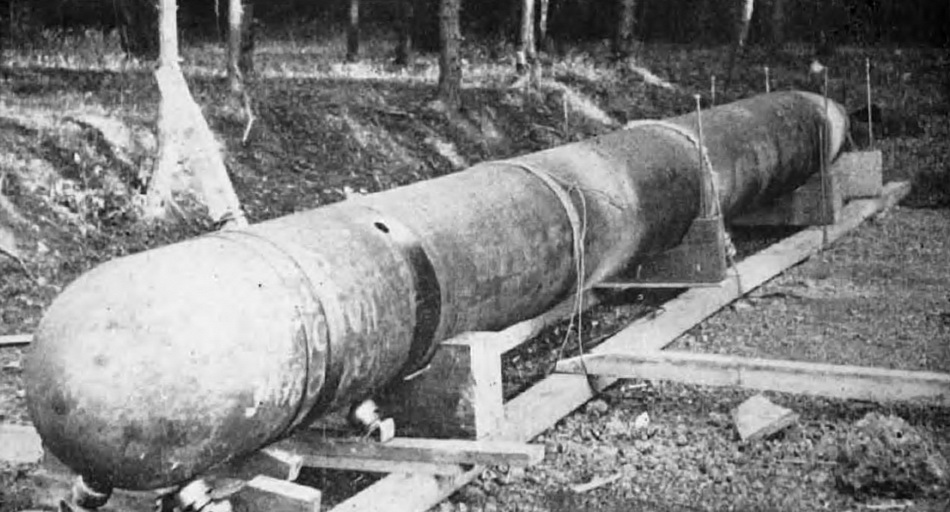
Figure 36 – This 24-inch destroyer or cruiser launched torpedo is one of the largest underwater ordnance item used by the Japanese. Its use of oxygen instead of com-pressed air allows it to travel with practically no visible wake. |
|
|
|
|